
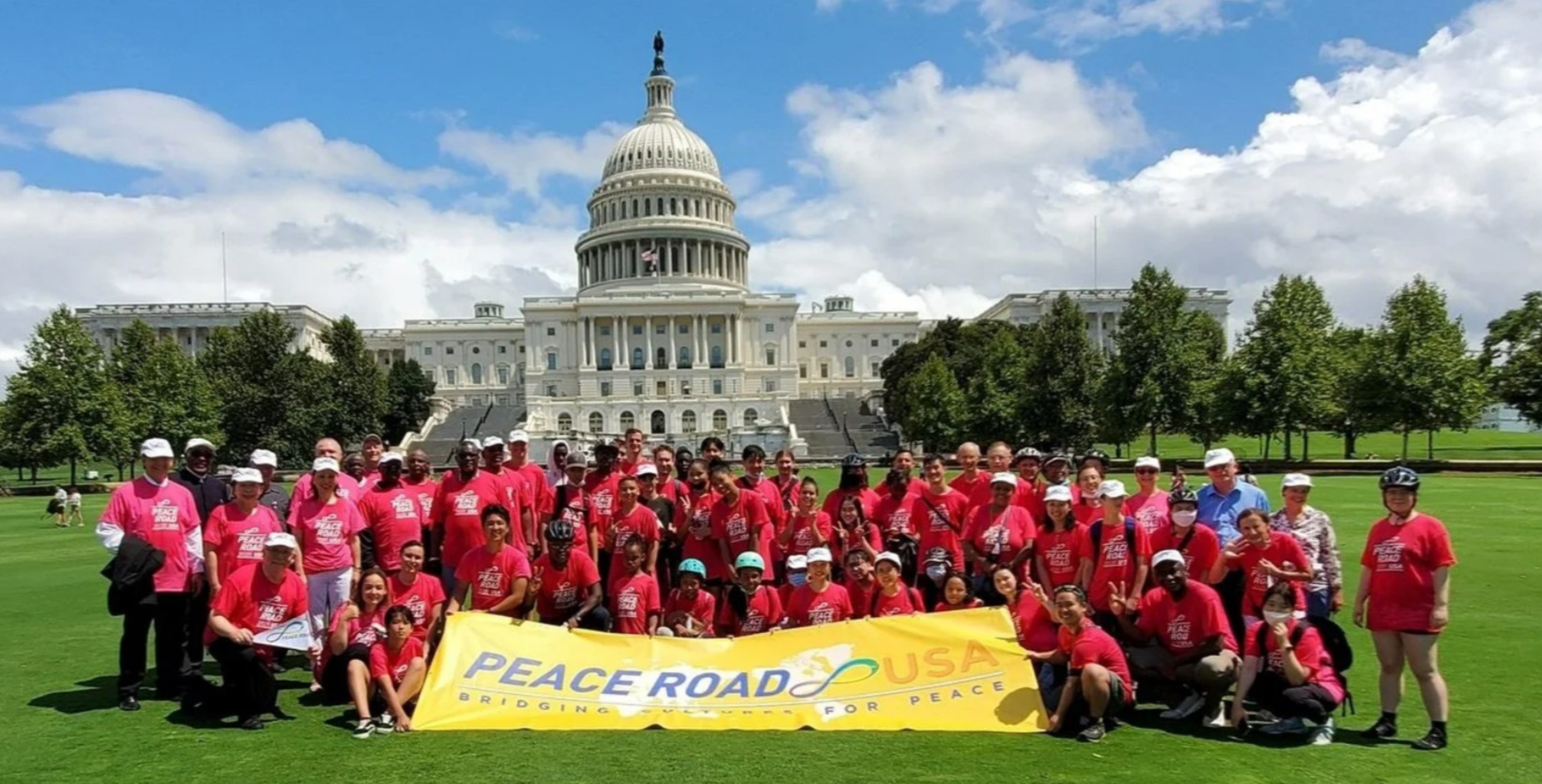
Peace Road is more than a walk, bicycle ride, or community event. It is a global movement that brings people together across differences of age, culture, religion, nationality, and background. Through Peace Road, the Universal Peace Federation (UPF) and its partners create opportunities for people to meet, share an experience, and discover their common humanity. A simple journey can become the beginning of a friendship, a partnership, or a stronger sense of community.
The roots of Peace Road go back to 1981, when Rev. Dr. Sun Myung Moon and Dr. Hak Ja Han proposed the vision of an International Peace Highway at an international science conference in Seoul. Their vision was based on the belief that greater connection between peoples could help overcome fear, prejudice, and historical divisions. Rev. Moon believed that humanity is one family under God and that people who have opportunities to meet, communicate, and work together can begin to break down the walls that separate them.
Over the years, that vision developed into something communities could actively participate in. In 2015, Dr. Hak Ja Han Moon helped launch Peace Road as a worldwide movement, encouraging people to take small, tangible steps for peace in their own communities. That year, Peace Road activities were held in more than 30 countries, with people walking and cycling through their cities and regions.
As Dr. Hak Ja Han Moon wrote in Mother of Peace: “To tell this story to the world, from the streets to the senate buildings, I had already created an affiliated project, ‘Peace Road.’” She described how the project had grown beyond its original purpose into a global movement for peace.
Today, UPF continues to support Peace Road activities around the world. Walks, bike rides, youth programs, service projects, interfaith gatherings, and community celebrations have brought people together in countries across every region. The activities may look different from place to place, but the heart of Peace Road remains the same: creating opportunities for people to connect.
The real impact happens through these personal encounters. A participant may arrive knowing only a few people and leave having met a new friend, a neighbor, a community leader, or someone from a completely different background. Young people walk alongside adults, faith leaders meet people from other traditions, and local organizations discover opportunities to work together. These relationships may seem small, but they are the building blocks of peaceful communities.
In a time when people can easily become divided by politics, religion, culture, and social differences, Peace Road offers a simple alternative: come together and walk together. People do not have to agree on everything to share a common purpose. They simply need a willingness to meet one another with openness and respect.
This is what makes Peace Road particularly meaningful at the local level. A street, park, school, or community center can become a place of encounter. A walk can open a conversation. A conversation can create a friendship. A friendship can lead to cooperation. Over time, these connections strengthen the trust and sense of belonging that every healthy community needs.
For UPF, each Peace Road event is also part of something much larger. Local participants become connected to a worldwide movement, reminding them that people everywhere are seeking ways to overcome division and build a more peaceful future.
Dr. Hak Ja Han Moon has described Peace Road participants as people of “all ages and nationalities” who come together to show their support for peace. That simple image captures the spirit of the movement: different people, walking the same road, united by a shared hope.
Ultimately, the destination of Peace Road is not a particular place. It is a stronger community—one where people know one another, care about one another, and are willing to work together.
Peace Road reminds us that peace is not simply something we hope for. It is something we can practice—together, one step at a time.
