
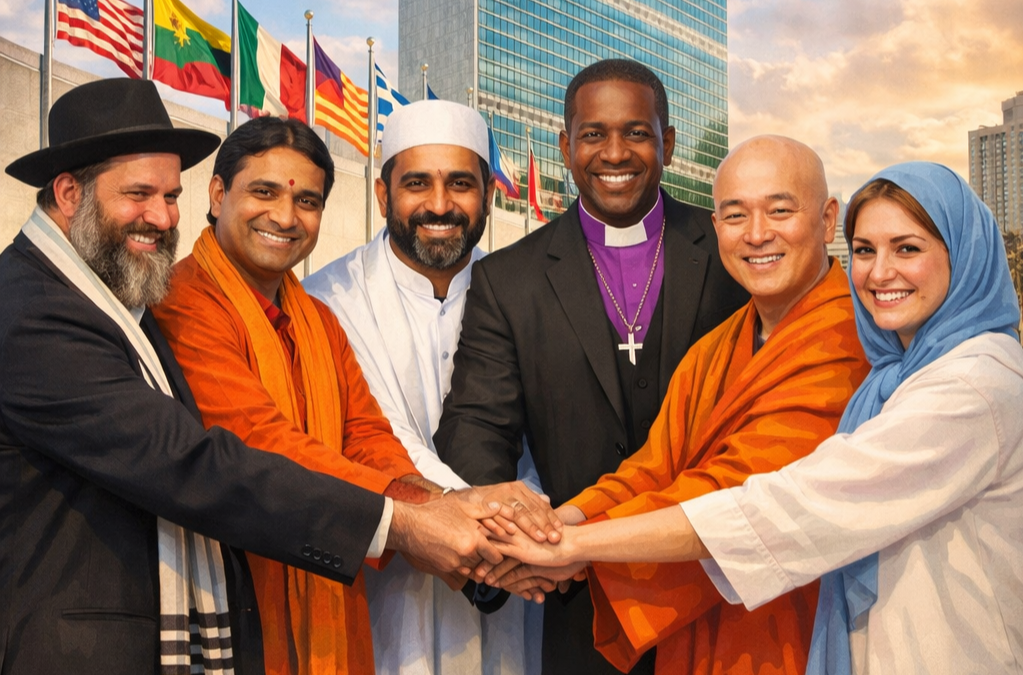
Each year, the United Nations World Interfaith Harmony Week invites the global community to pause and reflect on a simple yet transformative truth: peace becomes possible when people of faith choose cooperation over conflict and understanding over fear. Observed annually during the first week of February, Interfaith Harmony Week calls attention to the shared moral foundations that unite religious traditions, love of God and love of neighbor, or love of the good and love of neighbor, expressed through diverse beliefs yet grounded in common purpose.
This season of reflection is closely preceded by World Religion Day in January, forming a natural doorway into deeper interreligious engagement. Together, these observances remind societies that faith, when expressed with humility and integrity, can restore moral depth to public life and rebuild social trust in fractured communities. They also align closely with the United Nations’ vision for peaceful, inclusive societies and strong partnerships, as outlined in the Sustainable Development Goals.
For the Universal Peace Federation (UPF), interfaith harmony is not a symbolic gesture or a once-a-year theme—it is a lifelong commitment. Since the early 1970s, UPF’s founders, Rev. Sun Myung Moon and Rev. Dr. Hak Ja Han Moon, invested tirelessly in creating spaces where religious leaders, scholars, and communities could encounter one another with respect and sincerity. Their vision was rooted in the belief that enduring peace requires moral leadership shaped by faith and expressed through service.
Rev. Dr. Hak Ja Han Moon has consistently affirmed this principle, stating:
“Lasting peace requires harmony and cooperation among religions. Believers of all faith traditions should work together in love and respect, for the sake of fulfilling the Will of our Heavenly Parent.”
This conviction has guided UPF’s interreligious efforts across generations. Rev. Sun Myung Moon modeled this spirit through groundbreaking initiatives such as the Assembly of the World’s Religions, interfaith scholarly conferences, and educational institutions that welcomed clergy and academics from diverse traditions. His approach demonstrated that strong faith convictions need not lead to division, but can instead foster deeper courtesy, mutual learning, and shared responsibility for humanity’s future.
Following Rev. Moon’s passing, Rev. Dr. Hak Ja Han Moon has continued and expanded this legacy, strengthening UPF’s interreligious work through new global structures such as the Interreligious Association for Peace and Development. Under her leadership, interfaith dialogue is intentionally linked with peacebuilding, development, and practical cooperation—ensuring that harmony is not merely discussed, but lived.
Interfaith Harmony Week challenges today’s faith leaders, educators, youth, and public servants to move beyond rhetoric toward action. Hosting interfaith gatherings, engaging in joint service projects, promoting religious literacy, and standing together during moments of tension are all tangible ways to embody harmony. When faith communities collaborate on the common good, they help transform diversity from a source of anxiety into a wellspring of wisdom.
UPF’s Ambassadors for Peace are especially called during this season to model principled leadership—leadership that listens without surrendering conviction, serves without seeking dominance, and builds bridges where walls once stood. Whether through a small community dialogue or a shared act of compassion, these efforts affirm a hopeful vision: that humanity can learn to live as one family under God.
Interfaith Harmony Week is ultimately an invitation—to believe that peace is possible, to practice cooperation across difference, and to renew the moral courage needed to shape a more just and compassionate world.